
Your nose is running, your eyes are itchy, and you're looking for something other than a daily pill. Several simple steps can provide real relief.
Let's be clear from the start: none of them cure an allergy. They support, they don't replace anything.
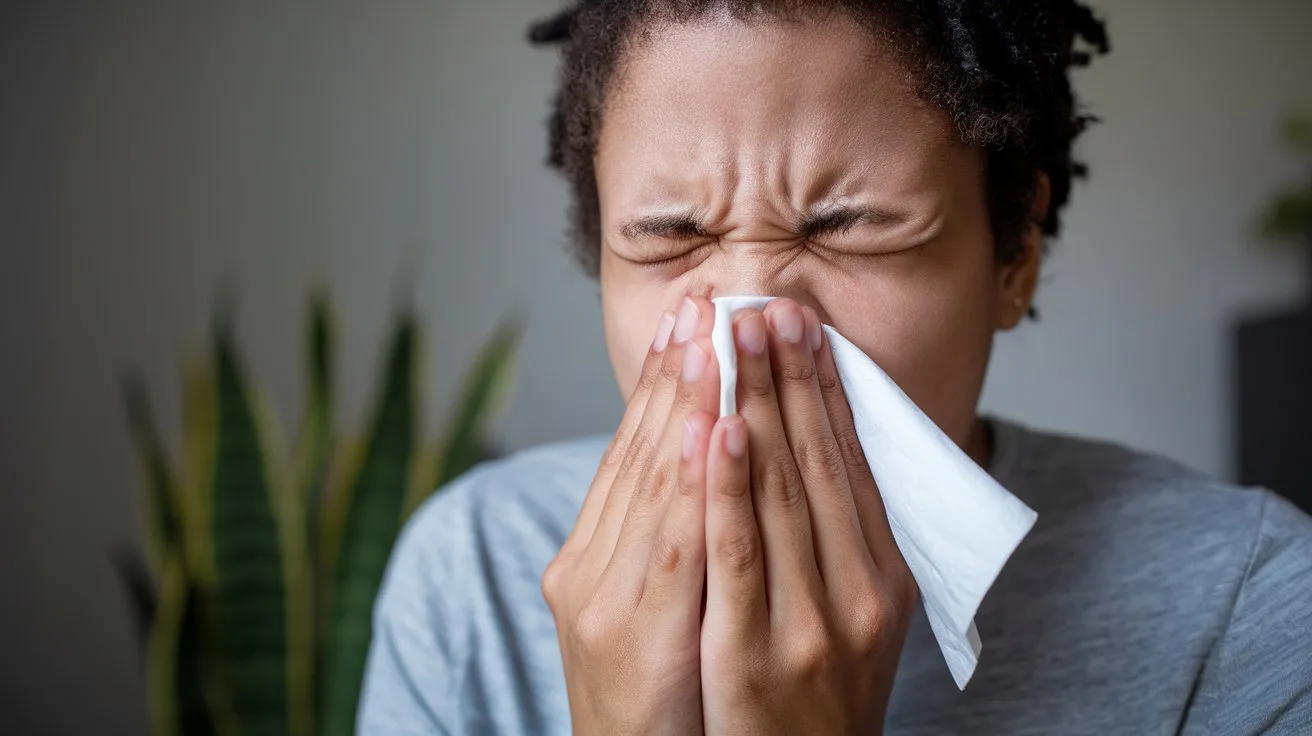
Why does your body react this way?
Your immune system identifies a harmless substance as a threat: pollen, dust mites, cat hair. It then triggers a disproportionate defense reaction.
The histamine released at this time causes the symptoms you're familiar with: sneezing, runny nose, itching. The mechanism is known, but what triggers it in one person and not another is much less clear.
In France, nearly one in four people is affected. The most troublesome pollens come from grasses, birch, and ragweed, each with its own season. Dust mites and pet dander, however, are a problem year-round.
Cold or allergy: the difference in 30 seconds
You've been sniffling for a week, and the doubt is growing. Three clues settle the matter.
Look at your eyes. A cold leaves them alone. An allergy makes them sting and water, almost always.
Count the days. A cold goes away in a week. An allergy lingers as long as the allergen is present, sometimes for months.
Touch your forehead. Colds sometimes cause a fever. Allergies never do.
Nasal rinsing: the gesture that changes everything
If you only remember one thing, remember this: Rinsing with saline solution mechanically removes particles stuck in the nostrils.
Morning and evening, and always after going out. This simple action costs almost nothing and works for all allergens, from pollen to dust.
In the evening, take a shower before bed. Your hair retains pollen all day long. Without this habit, you'll end up with it all over your pillow. Outside, wearing protective sunglasses will block some of the pollen that irritates your eyes.
Plants present in tradition
Nettle, plantain, and peppermint are traditionally used to support respiratory comfort. A hot herbal tea soothes a sore throat, but its benefits are limited.
These plants have no authorized health claims in Europe on this subject. We present them for what they are: an ancient practice and a pleasant experience.
Local honey is a recurring theme in grandmother's advice. The idea is to gradually become accustomed to the pollens of one's region. While there's little evidence to support it, the pleasure remains.
Your plate matters more than you think
Focus on colorful fruits and vegetables. Bell peppers, kiwis, and citrus fruits provide vitamin C, which contributes to the normal function of the immune system. This is one of the few validated claims in this area.
Beware of a little-known pitfall: cross-reactivity. If birch pollen bothers you, a raw apple can irritate your throat. The same goes for hazelnuts or cherries.
The reason? These foods resemble pollen, the body's eyes. Cook the apple, and the discomfort often disappears. This detail saves many a spring meal.
Prepare for the season before the first sneezes.
Here's the mistake almost everyone makes. We act too late, our noses are already stuffed up. The best time is one to two weeks before the pollen season.
Monitor pollen forecasts for your region starting in late winter. Hazel and alder are often the first to appear. Mild winters can bring the season forward by several weeks.
Your home, your refuge
In your home, allergens are more prevalent than you might think. Ventilate early in the morning, when the air is still fresh. Close the windows in the afternoon, at the peak of pollen season.
A HEPA filter purifier captures a large portion of the particles. Choose a good model, not the cheapest one. A weak filter circulates the air without cleaning it.
To combat dust mites, the bedroom should be treated first. Use anti-mite covers, wash sheets at 60 degrees Celsius, and keep as few textiles as possible on the floor. Change sheets frequently during pollen season.
In the car: the mistake almost all allergy sufferers make
The passenger compartment is thought to be protected. Wrong. The charged air enters through the ventilation system, without noise.
Keep your windows closed during the season. Don't forget your cabin air filter, that pollen filter that many people overlook. Changed annually, it traps particles. When clogged, it releases them back into the car.
Set the air conditioning to recirculate, never to outside air. A long journey will become bearable again.
Allergies in children: gentle approaches
A child who sneezes constantly is worrying. The right reflexes are simple and safe.
Wash your baby's nose with saline solution, using a single-dose vial. It may seem like a small thing, but it makes all the difference. Avoid the park during the hottest hours and opt for an outing after it has rained. For any treatment, consult your pediatrician first.
Supporting its vitality during the season
Seasonal changes cause fatigue. Magnesium helps reduce temporary fatigue; this is a recognized benefit.
Phytomisan quail egg capsules provide magnesium and micronutrients. To be clear, they do not treat allergies. They support your energy levels during demanding periods.
The 4 mistakes that worsen your allergy
Sometimes, we perpetuate the problem unintentionally. Here are the most common mistakes.
First mistake: hanging laundry outside. It comes back covered in pollen, and you sleep in it. Dry it inside for the season.
The second mistake is rubbing your eyes. The action provides temporary relief, then makes everything worse. Instead, apply a cool compress for ten minutes.
Third mistake: waiting for a crisis to react. You're then chasing after the symptoms.
Fourth mistake: stopping everything at the first sign of relief. The allergen returns, and so do your symptoms.
When to consult
If your symptoms are ruining your nights or your work, make an appointment. An allergist can precisely identify the allergen and offer appropriate treatment, something no herbal tea can do.
Certain signs indicate an emergency: a tight throat, swollen lips or eyelids, shortness of breath. Call 15 immediately and do not attempt any home remedies.
Your questions, our answers
Is hay fever the same as pollen allergy?
Yes, it's the same problem, under a different name. Hay fever refers to an allergy to grass pollen.
Does local honey cure pollen allergies?
No, no study proves it. It remains a pleasure and a habit. For real relief, see a doctor.
Is an air purifier enough on its own?
No. It reduces indoor particles, but it doesn't do everything. Combine it with other actions.
Can you develop allergies in adulthood?
Yes, it happens more often than you think. An allergy can appear at 30, 40, or 50 years old. An allergy test will clear up any doubt.
What gesture can soothe a runny nose without medication?
Rinsing with saline solution several times a day. Simple, gentle, and accessible to everyone.
The season doesn't have to be all about tissues. A few well-placed habits can already make a difference in your daily life. Prepare early, listen to your body, and keep your doctor informed.